For most of my adult life, I was strictly a debit-card-only person. My philosophy was simple: if I didn’t have the hard cash sitting in my bank account right now, I couldn’t afford it. Credit cards felt like a dangerous trap designed by banks to lure everyday Aussies into high-interest debt spirals. I wanted absolutely no part of it.
I preferred knowing that when I tapped my card for groceries, bills, or fuel, it was my own hard-earned money immediately leaving my account. No bills at the end of the month, no interest rates, no risk.
However, a few years ago, I decided to sit down and actually do the maths. I spent hours dissecting how credit card reward points work, calculating annual fees, analyzing interest structures, and weighing the pros versus the cons. What I discovered changed my perspective entirely: credit cards are not inherently bad—they are simply tools. Used incorrectly, they are expensive. Used strategically, they can subsidize thousands of dollars of your lifestyle.
From cash-only spender to flying a family of five across Australia for a fraction of retail cost.
The 3-Year Experiment: 800,000 Points in the Bank
After running the numbers, I took the leap. I changed my daily spending habits completely—not by spending more money, but by routing all of my existing household expenses through carefully selected reward credit cards.
Fast forward three years, and here is what the real-world results looked like:
Total Reward Points Accumulated: 800,000+ Points
Earned by combining regular household expenses with strategic sign-up bonuses on low-cost cards.
Total Out-of-Pocket Card Fees Paid: ~$1,100
Combined annual card fees over a three-year period.
Total Interest Paid: $0.00
By strictly clearing 100% of the balance before every statement due date.
Putting It Into Perspective: The $7,000 Holiday for $650
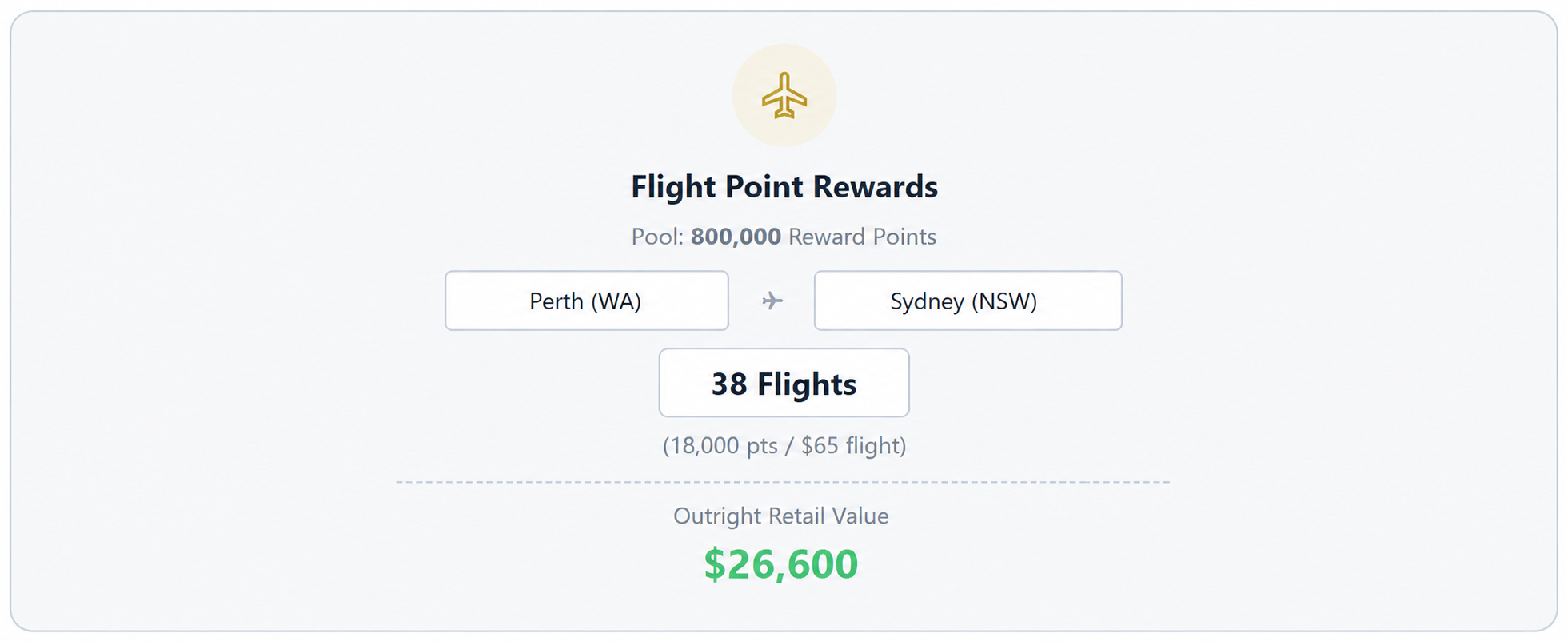
Points sitting in an account look nice, but their real value is tested when you actually redeem them. Recently, I booked a family holiday for five of us to fly return from Perth to Sydney.
If I had booked those flights out of pocket with cash—like I always used to do—it would have cost approximately $7,000 full retail price for our family of 5.
Instead, by utilizing our accumulated reward points pool:
- Points Used: ~180,000 reward points
- Cash Paid: ~$650 in total airport taxes and airline fees
- Net Flight Savings: Over $6,350 back in our family budget
And it didn’t end with the flight tickets. Because higher-tier reward cards often come loaded with premium perks, our family walked straight past the noisy, crowded airport terminal and into the executive departure lounge using our complimentary passes. Free hot meals, coffee, snacks, and a quiet space to relax before boarding turned a stressful travel day with kids into a luxury start to our holiday.
The real-world math: $1,100 in card fees returned over $6,300 in flight savings alone.
The Catch: When Credit Cards Become an Expensive Mistake
It is critical to be completely transparent about this: credit cards are not a free money machine. The banking system is structured around the expectation that a huge percentage of cardholders will slip up, carry a balance, and pay extortionate interest rates averaging 20% or higher.
If you fall into any of the following categories, a rewards credit card will end up costing you significantly more than it gives back:
- Carrying a Balance: The moment you pay interest, the math breaks. A single month of interest charges at 20%+ APR will completely wipe out the dollar value of any reward points you earned that month.
- Unused Perks: If you pay a $395 annual fee for a card that offers lounge passes, travel insurance, and flight vouchers, but you never travel or use those perks, you are throwing money away.
- Lifestyle Creep: If having a $10,000 credit limit tempts you to buy items you wouldn’t normally buy with cash, you are falling into the trap.
My Three Golden Rules for Rewards Cards
Rule 1: Only put purchases on the card if you already have the cash in your savings account to cover it instantly.
Rule 2: Set up an automatic direct debit to clear 100% of the statement balance every single month without exception.
Rule 3: Always audit the annual fee versus the actual value extracted from perks at least once a year.
****For an added bonus, keeping your money in a high interest savings account for an additional month instead of spending it daily, you are now earning interest.
Are Credit Card Perks Worth It for You? Test the Math
Every household has different spending levels, travel goals, and repayment habits. What worked brilliantly for my family might not make financial sense for yours if you don’t clear your balance every month or if card fees outweigh your perk usage.
To help you see the exact net impact for your personal situation, use the free interactive Credit Card & Perks Calculator on ClearCents.au. Enter your monthly spend, card fees, interest rate, and repayment strategy to calculate your real-world net cost or savings instantly.
Take Control of Your Personal Finance
Ready to explore more unbiased, real-world calculators. Test your numbers on ClearCents.au today.
Explore ClearCents Tools